The one about "epiphanies"
The MyMaslow app is a digitized version of a journaling process I’ve maintained for years. The journaling process is not all that interesting, so I’ll tell you about what led to it.
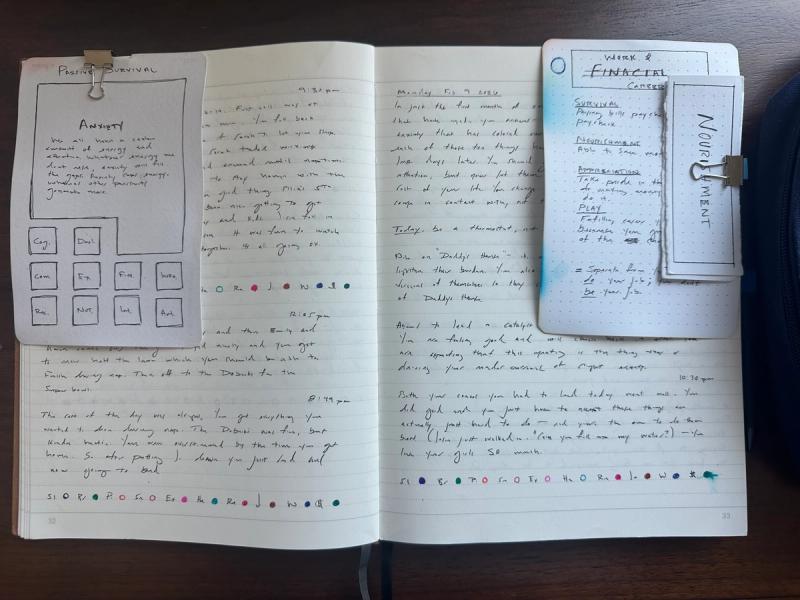
Three realizations changed things for me. I’m tempted to use the word “epiphanies,” but it sounds overly enlightened for how simple these realizations were.
Realization #1
You can’t and shouldn’t do everything. Learn what works and then do that again and again.
I’ve read most of the books. I assume you have, too. Self-help, clinical psychology, CBT workbooks. I follow therapists and PhDs on social media and read their newsletters. For those of us who struggle with anxiety, there is an abundance of helpful information out there. Read: overabundance.
The volume of helpful information we have access to has made the whole of it unhelpful. How do you know what matters? It can’t all matter, right? I concluded that there is no number of 600-page books that will change my life. But, there are likely 600 words if thought about daily, internalized, remembered rather than read anew, that will rewire us for a better life rather than just reinspire us for another moment.
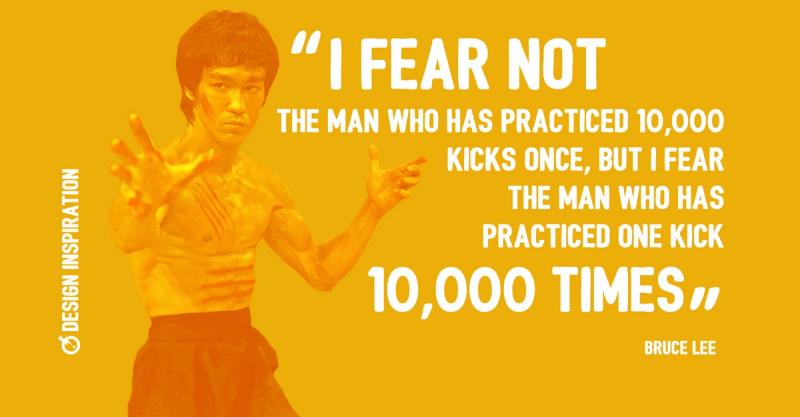
At the risk of discrediting myself completely, I’ll quote Bruce Lee: “I fear not the man who has practiced 10,000 kicks once, but I fear the man who has practiced one kick 10,000 times.” We’ve spread ourselves thin trying to find the silver bullet that fixes everything. Instead, we need to master our one kick.
My second realization is an extension of the first, so let’s call it realization #1.5.
Realization #1.5
Anxiety isn’t novel
Anxiety isn’t novel. There’s not an army of anxiety bots coming for you. It’s just one guy. The same guy up to his same tricks. The anxiety I feel today at 39 in the workplace is the same anxiety I felt when I was seven walking onto the teeball field, is the same anxiety I felt all through my 20s in social situations with more than three people. The anxiety seems different because the situational ingredients are different, but it’s the same anxiety attaching itself to whatever I put in front of it.
Since anxiety isn’t novel, we don’t need to keep coming up with new solutions. We need to uncover the thing that works for us, and then do that thing over and over again. Recall: Bruce.
That makes overcoming anxiety possible. It’s one problem. We just need to figure out how to solve our version of anxiety once. And then we can solve it every time. That does require the uncomfortable work of figuring it out. Of sitting in our anxiety and looking at it and tweaking the things around it and in ourselves until it gets less uncomfortable. Until the power dynamic shifts in our favor. Until we no longer think about solving it, no longer give it the time of day, and just go about our business. The thing about practicing one kick 10,000 times is that you rarely have to use it. TBH I did not expect to reference Bruce Lee so much.
MyMaslow gives you a comfortable place to sit with your discomfort while you tweak, reflect on, and put into practice what works for you.
Realization #2
Anxiety is nothing without you.
AKA anxiety is what you make it. AKA anxiety is an invasive weed that you can spend your days plucking OR you can, instead, plant and water the things you want to go and crowd anxiety out.
Now, if any of these realizations could be mistaken for an epiphany, it’s this one. It’s quite good if I can say so myself. Here it is. Anxiety has no power of its own. It can only do what we let it. And we’ve made a habit out of letting it do most everything it wants.
Even the idea of managing anxiety puts it on a pedestal. We manage anxiety by learning about it. Reading about it. Meditating about it. We manage anxiety by spending all our waking moments thinking about it. All that does is give anxiety our attention, and our attention is what anxiety feeds on. Like cutting off the oxygen to a fire, we need to cut off attention for anxiety and it smothers.
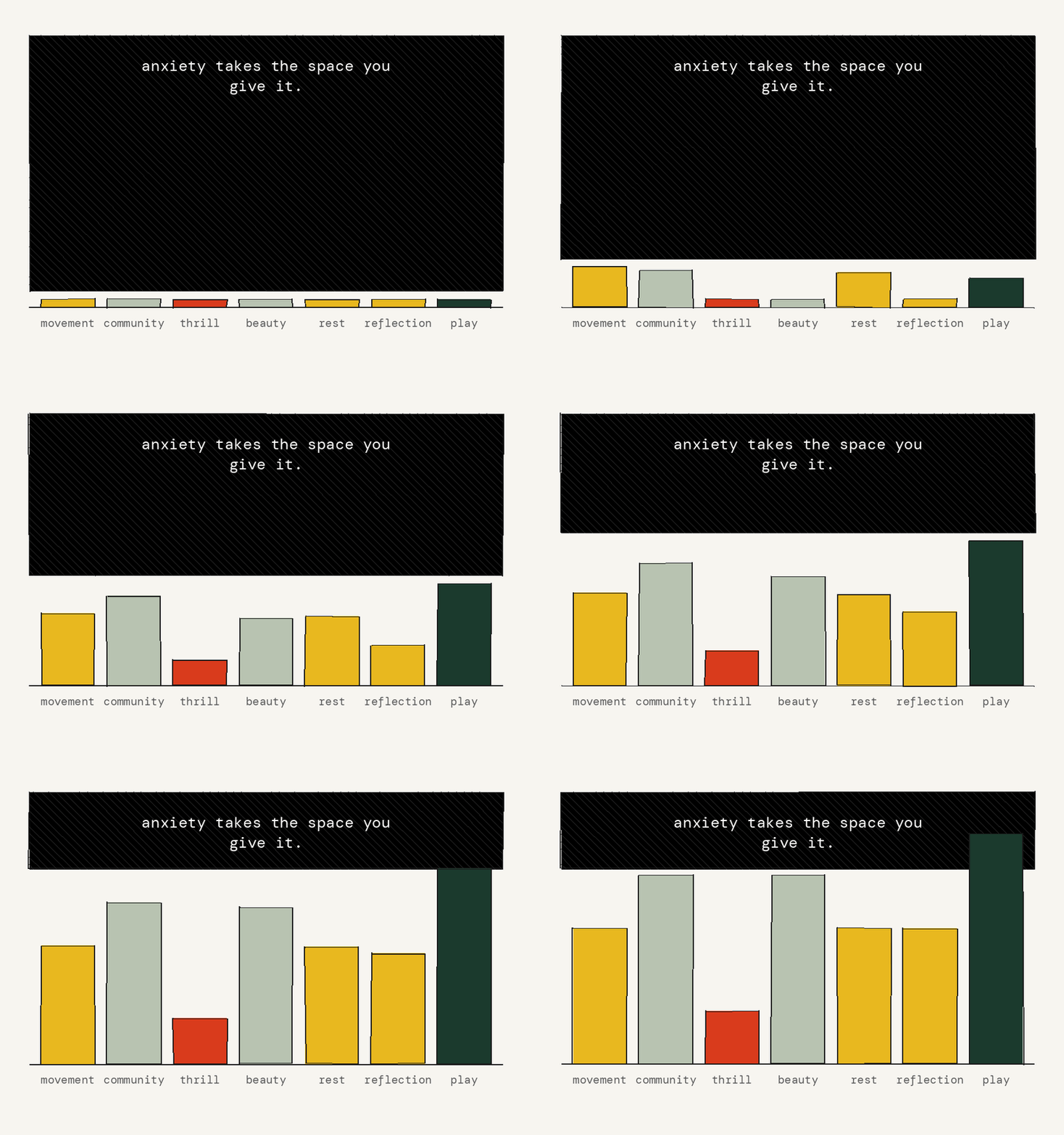
This realization is the core of MyMaslow. It shifts the microscope to focus on our needs, not anxiety’s. Those basic needs we need to operate as human beings. Eat. Sleep. Move. And those needs we need to feel alive. Community. Beauty. Play. Money. Reflection. Et cetera.
(This is also where MyMaslow gets its namesake. I.e., Abraham Maslow’s hierarchy of needs.)
MyMaslow helps us visualize the space our lives take up, so we know what we need to protect (in the app, it’s called your Canvas). We plug our needs into this space and watch anxiety shrink, theoretically. Then we translate our theoretical needs into practical actions that we complete every day, allowing us to feel more of life and less of anxiety.
Realization #3
The body feels first. The mind thinks second.
There’s the world. There’s us. And there is our relationship to the world. Three things. Anxiety only exists in the third––in our relationship to the world. Yeah, the world can really suck sometimes. Bad things happen. Those bad things create real fear, pain, justifiable misery. And that’s expected. It’s ok to be afraid and miserable about real things. Anxiety, though, is a charlatan. It’s the fear of fear. It makes us believe the world is at its worst every moment of every day and, oh, how there is nothing for little ole us to do about it.
None of that is new. We all know that. Knowing it in theory, even logically, doesn’t change anything. That’s why all our well-intended books haven’t dealt anxiety the death blow. Our minds are no match for anxiety. By the time we try to go head to head with anxiety on a logical level, we’re done for. We’re playing anxiety’s game, by its rules, and with its refs that have long ago been paid off.
The body, not the mind, is the key to getting the advantage. The body feels first; the mind thinks second. Change how you feel, and you change how you think. You change how you feel by taking control of how you relate to the world.
That’s where MyMaslow’s daily practices come in. Someone who eats breakfast, makes time for exercise, spends time with their family, and prioritizes the host of other things important to them, is not someone who is debilitated by anxiety. Sure you might be anxious. Sure you may feel debilitated by anxiety, but you’re telling your body it doesn’t matter. You’re still going to do you. Meeting your needs with daily actions convinces your body you’re in control. A body that believes it’s in control has no need to be anxious. Your mind takes its cues from this body and skips the anxious thinking.
To be clear, it’s not a flip of the switch. We’ve been training our bodies and minds to hang on anxiety’s every word for years, maybe decades. So it is going to take a lot of days of regular practice to convince our bodies otherwise. But when we do, we’ll start to naturally produce more productive feeling and thinking patterns.
Honorable mentions.
Those are the big realizations that teeter on the edge of epiphanies that shaped MyMaslow. Here are a few other tasty bits that didn’t directly impact the app design, but have changed my personal relationship to anxiety.
Anxiety is just energy that we know by the wrong name.
Like at the end of the movie when the villain says to the hero, “In a different life, we could have been friends,” anxiety is just misguided. That same energy turns into creativity, confidence, or care when we change what drives it. And we’re not just trying to defeat a villain, we’re trying to bring it over to the good side.
Anxiety is just an errant neurotransmission all grown up.
The reality-altering, identity-defining anxiety we know today started out as a little baby neurotransmission. One day, a very long time ago, one neuron passed an electrical signal to another neuron. Something about that handoff made us freak out a little. We didn’t question it, though, and instead, taught ourselves that whenever that happens, we should continue to freak out a little. Then a little more. Then we should freak out when something similar happens. Then freaking out became our default state because we didn’t call BS on the little baby neurotransmission all that time ago. But it’s not our fault because we were literal babies ourselves. Now that neurotransmission is all grown up and a full-blown neurosis. And that sucks, but it’s something we can cut down to size when we realize it’s not who we are.
We have to walk out of the woods but it doesn’t have to be scary.
Every time we give in to our anxiety, we walk further into a dark forest. Many of us have been walking for years. Everything in this forest feels like a threat. A branch cracking underfoot. Shadows from unknown sources. The sound of presumed footsteps.
Like people suffering from any type of addiction, we have to turn around and walk all the way out of the woods before we truly feel free from anxiety. But, the jaunt out doesn’t have to be as bad as the walk in. Yeah, we’re deep in the woods and we don’t want to be there. But we know we’re heading out. That brings the sun up. Things aren’t shrouded in darkness anymore. There’s moss on the trees. No more shadows. The ominous footsteps we heard are actually just the pitter patter of squirrels. Pitter patter. Ominous footsteps turn into pitter patter on the way out. Things change when you’re just dealing with pitter patter.